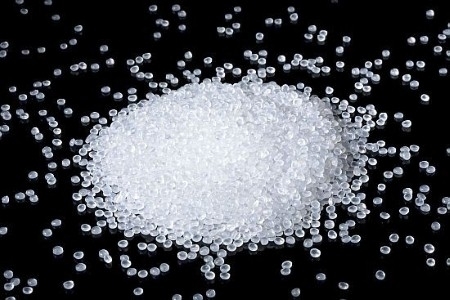
About PVC Resin Granules
Polymer & Resin Granules
Polymer is a long, repeating chain of atoms, formed through the linkage of many molecules called monomers. The monomers can be identical, or they can have one or more substituted chemical groups. These differences between monomers can affect properties such as solubility, flexibility, or strength. In proteins, these differences can give the polymer the ability to preferentially adopt one conformation over another, as opposed to adopting a random coil (see self-assembly). Although most polymers are organic (based on carbon chains), there are also many inorganic polymers.
Polymer known as polymer substrate is used for everyday banknotes in Australia and New Zealand, and is also used in commemorative notes in other countries.
Resin (Chemistry / Elements & Compounds) any of a large number of synthetic, usually organic, materials that have a polymeric structure, esp such a substance in a raw state before it is molded or treated with plasticizes, stabilizer, filler, etc Compare plastic.
Properties : Techniques such as wide angle x-ray scattering, small angle x-ray scattering, and small angle neutron scattering are used to determine the crystalline structure of polymers.
High-Quality PVC Resin GranulesOur PVC resin granules are tailored for demanding industrial applications, ensuring reliable results across cable manufacturing, automotive parts, and footwear. The granules offer consistent particle size and easy processing due to their excellent heat stability and low ash content. Their versatility makes them ideal for both injection molding and extrusion, providing flexibility to manufacturers seeking quality and efficiency.
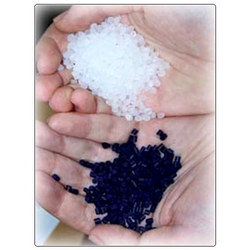
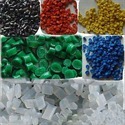
User-Friendly and Versatile MaterialEngineered for ease of use, these PVC resin granules require minimal preparation and adapt well to various molding processes. Their customizable thickness and Shore A hardness make them suitable for numerous applications, from general plastic molding to precision components. Available in black and white, they meet diverse design and functionality requirements while ensuring long-lasting performance.
FAQ's of PVC Resin Granules:
Q: How should PVC resin granules be stored to maintain their quality?
A: PVC resin granules should be stored in a cool and dry place, away from direct sunlight and moisture, to ensure they retain their properties and perform optimally throughout their minimum one-year shelf life.
Q: What processing methods are suitable for these PVC resin granules?
A: These granules are designed for both injection molding and extrusion processes, making them versatile for a wide range of industrial manufacturing applications.
Q: When is it recommended to use PVC granules with these specific features?
A: It is best to use these granules when your application requires good heat stability, high elongation at break, low ash and moisture content, such as in cable manufacturing, automotive parts, and precision plastic molding.
Q: Where can these PVC resin granules be applied?
A: They are suitable for industries like cable manufacturing, footwear production, automotive parts manufacturing, and general plastic molding-anywhere high-quality, durable plastic components are required.
Q: What benefits do these PVC resin granules offer over other materials?
A: These granules provide excellent heat stability, low volatility, and high elongation at break, resulting in tough and durable finished products. The easy-to-use form and customizable options further enhance efficiency and design flexibility.
Q: How does the customizable hardness benefit manufacturers?
A: With a typical Shore A hardness range of 65-90, manufacturers can select the right hardness to meet specific application requirements, ensuring product durability and functional performance.
Q: What warranty and packaging options are available for these PVC granules?
A: We offer a warranty on all our PVC resin granule shipments. Packaging is typically in plastic bags, but we can accommodate special packaging requirements to suit your operational needs.

 Send Inquiry



 Send Inquiry

 Send Inquiry


